The Southern Black Girls and Women’s Consortium
The Southern Black Girls and Women’s ConsortiumThe Southern Black Girls and Women’s Consortium is a collective of funders, activists, and community leaders working to advance the movements for Black girls and women in the Southeast.
The history and ACF's role.
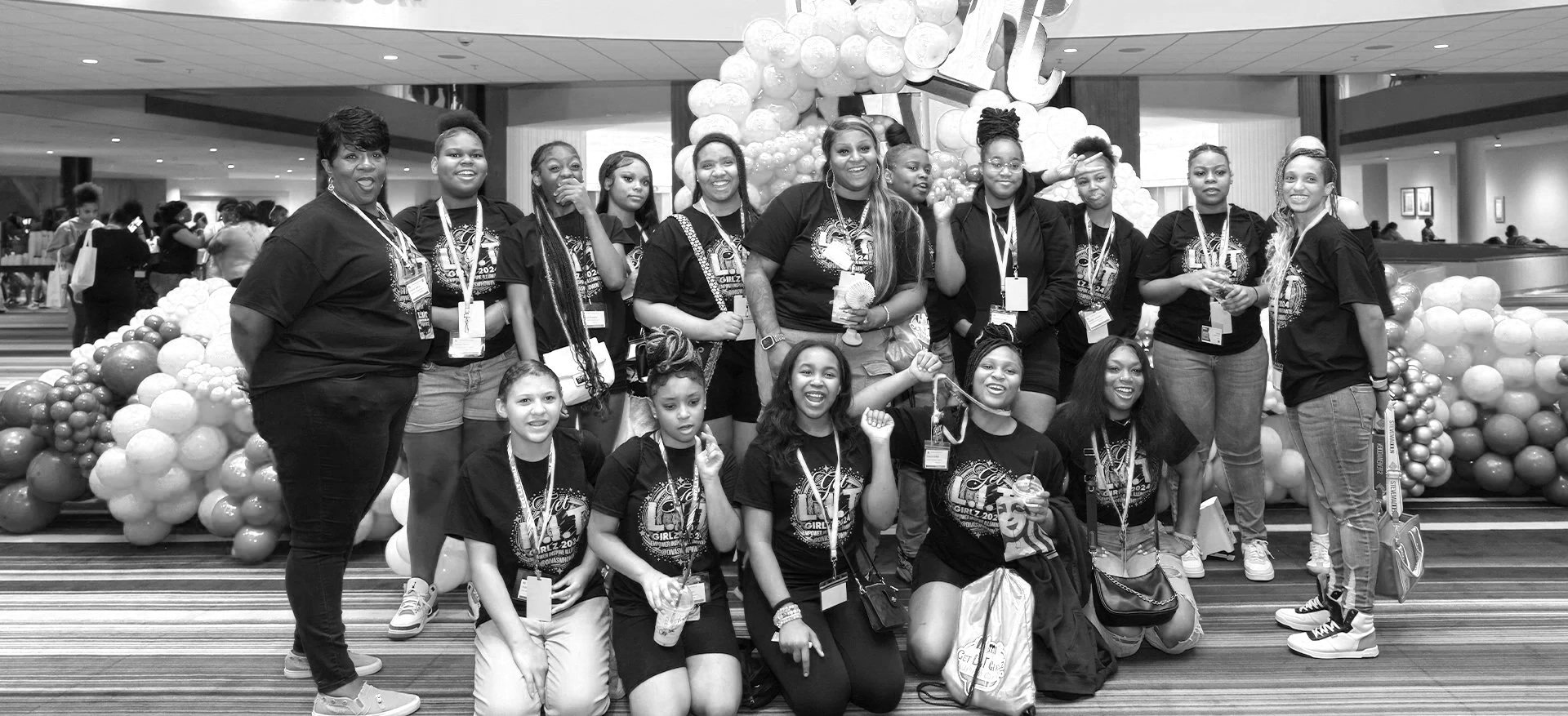
Started as a partnership with the NoVo Foundation, Appalachian Community Fund, Black Belt Community Foundation, Fund for Southern Communities, and Truth Speaks Consulting, Southern Black Girls is thriving.
The story of the Southern Black Girls and Women’s Consortium (now Southern Black Girls) began in 2017 as a radical response to findings that Black women and girls in the South received less than 1% of total philanthropic funding.
Visionary founder LaTosha Brown sought to increase funding for Black women and girls by calling upon three established "philanthropic powerhouses" to serve as anchor institutions for a new movement:
Margo Miller and the Appalachian Community Fund (ACF): As the then-Executive Director of ACF, Margo Miller brought deep roots in social justice and community organizing from Central Appalachia. Miller and ACF joined as a founding anchor partner, leveraging their expertise in supporting grassroots social change to help coordinate the consortium entirely by and for Black women. Miller has emphasized that this partnership is about more than just funding; it is about fostering self-determination and enabling Black girls to "bring more of their magic into the world".
Felecia Lucky of the Black Belt Community Foundation.
Alice Jenkins of the Fund for Southern Communities.
Together, this collective set a 10-year goal to raise $100 million to financially empower Black girls and women across 13 Southern states. Through participatory grantmaking and community listening sessions, Miller, Brown, and their partners established a model that centers the lived experiences and dreams of the girls themselves, shifting the narrative from one of victimhood to one of victory.