#ThisIsAppalachia: Running For Social Justice
Fundraising for Social Change
What you love to do can serve
by Walter Davis
Two Examples, 1990s and nowRiding and Running for Social Justice

 We share with you how ACF supporter Charles Calhoun this year combined his love of long-distance running with support to social justice through Appalachian Community Fund. His generosity of time and energy recalled another person who gave so much of himself in time and energy. The late Peter C. Reilly, III, a founding board member of the Appalachian Community Fund, made creative use of his love of bicycling. To mark his 50th birthday, he com-pleted a coast-to-coast bicycle ride fundraiser for ACF and the Funding Exchange. Bicycle lanes and public awareness of sharing the road wasn’t as common in the late 1990s.
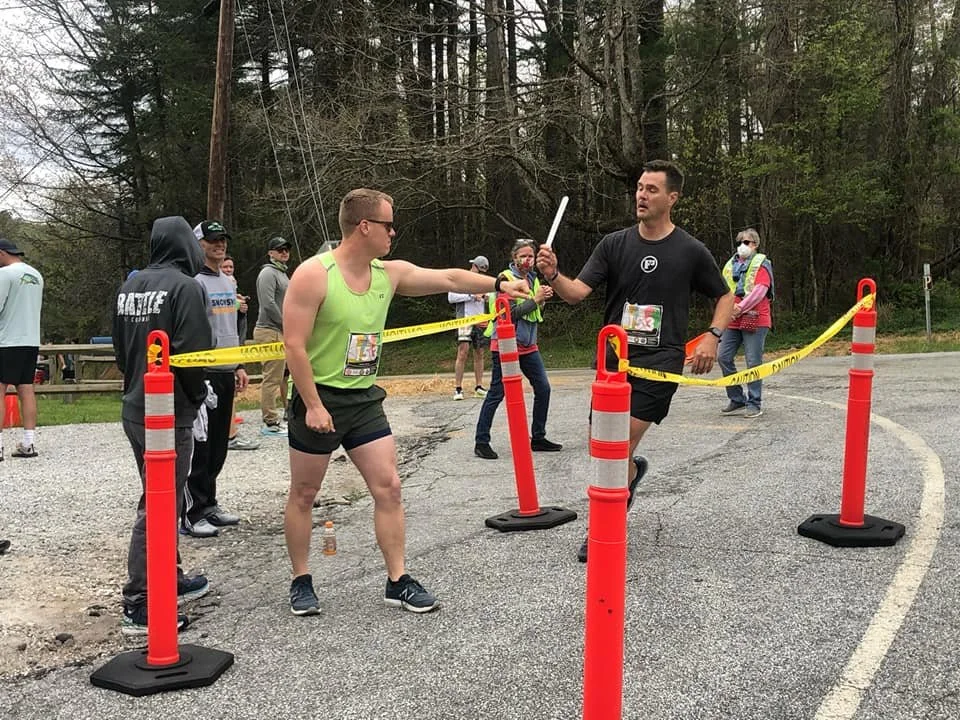
In June, Charles Calhoun ran “100 miles for justice” raising funds to support the Appalachian Community Fund (ACF). This was his first time combining his love of running with raising funds for programs reflecting his concern for mountain people and their environment. He was drawn to ACF’s theme, “Change not Charity.”Charles lives in Columbia, South Carolina, but his heart links to Greenup County in Eastern Kentucky where he grew up.We spoke to Charles just after his return from a trip to Asheville, North Carolina, where he’d trained with a team of friends for September’s Blue Ridge Relay through Virginia and North Carolina, “one of the longest running relay races in the United States.” His team “warmed up” tor the relay in the midst of hot summer weather.As someone who grew up in Appalachia, Charles heard the stereotypes of mountain people, particularly rural folk. Fortunately, he had schools, family and mentors with different perspectives. He looked for ways in which working for change happens through the engagement of the people in their own solutions.Charlie acknowledges the importance of teachers and professors who shared a wider lens for looking at the Appalachian region. He came to appreciate Appalachian diversity in action and visibility. Appalshop staff, for example, helped him see the rich creative cultural well to draw from in Appalachia. He learned of the struggles of the coal miners against Pinkerton goons and the Battle of Blair Mountain. The industrial age introduced new conflict to the region.We asked Charles to share Ideas from his first experience at fundraising through running.Charles offered these thoughts: To start, take time to get started and plan. Partner with people in the area or the organization you are supporting. Consider how best to spread the word – most productive is one-on-one getting support which means telling the story to potential sponsors. That means you need to have more than a passing knowledge about the group you support. Also, think about your own social media presence.During his run, Charles tracked his progress and posted his travel route (which involved several states) for sponsors. He engaged his friends and family and shared his interest in why he chose ACF.Now Charles is considering his next personal fundraising project. He will judge how he does in the Blue Ridge run and consider the options for running for justice, again.Charles works professionally in the development of resources for historic preservation. Today in the South that work faces many new issues, including the legacy of slavery. What is preserved and the story behind it is now part of the understanding of history. When the discussion of heritage arises now, there are new lenses to look through that question a narrative of omission and domination.Thanks to Charles for his support and inspiration. Keep on running. Best of luck in the Blue Ridge Relay.
Contact Walter Davis, walter@appalachiancommunityfund.org, if you have a positive story about people, places, and things in Central Appalachia.